
Do you need a logo or a complete brand identity?
Understand the difference between a logo and a brand identity, and choose a useful scope for your website, print and signage.
Make It Look ·
A logo is one part of how your business looks
A logo is a recognisable mark or wordmark. A visual brand identity adds the choices that make the rest of your materials feel connected: colour, typography, image treatment, layout and guidance for using them.
A new logo can be a sensible starting point when you already have a workable visual system. An identity project is more useful when the website, business cards, signage and social posts look unrelated, or when the business has changed and its materials no longer explain it clearly.
Choose the scope from the places customers see you
List where the identity will appear. A florist might need a logo, bouquet labels, cards and social graphics. A building company might need a website, van graphics, site boards and documents. These are scoping examples, not a standard package every business needs.
Put the most important applications first. A small social profile image and a large shop sign place different demands on a design. Reviewing the mark in those settings helps reveal whether its detail, shape and lettering are practical.
How the identity is developed with you
You work directly with Aman Arora at Make It Look. The first conversation covers your audience, goals, budget, timing and design preferences. The usual process is a proposal, deposit, initial concepts, feedback, final proof and then final payment.
An identity project can bring together the logo, colour, typography and guidance for using them. Applications such as stationery, signage and digital materials are scoped around your needs. The proposal separates the identity itself from the first materials you want to put into use.
Look at the work as a system
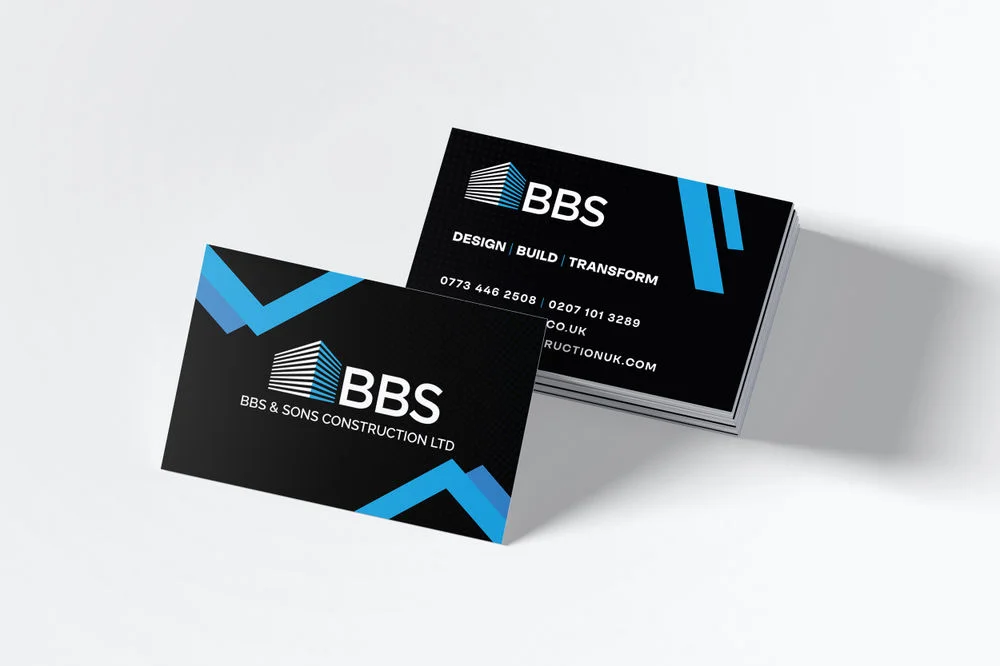
For BBS Construction, a confident blue palette, geometric lines and the “Design | Build | Transform” tagline connect the business-card design with van wraps, hoarding boards and letterhead. This shows how the same visual choices can work across a small card, a vehicle and a construction-site board.
For Crafted Petals, the logo combines refined typography with floral elements that relate to its handmade bouquets. A focused logo brief and a wider identity project can both be appropriate. The choice depends on what the business needs to put into use.
Ask what you will receive
You receive the file formats needed for the agreed uses, along with supporting documents. The proposal sets out the specific deliverables, including the designs and applications being created for your project.
A logo file that scales without losing sharpness is useful for a sign or van; image files are useful for websites and social profiles. Supporting guidance helps explain how the colours, lettering and layouts work together.
Keep what already works
Before replacing an identity, ask what customers recognise and what is causing difficulty. The problem might be inconsistent use rather than the logo itself. Collect current materials and identify the parts you want to retain.
Give the designer context about your audience, business direction and competitors. References are useful when you explain why they appeal to you: clear lettering, a calm layout or a distinctive colour combination.
Write a brief around the next stage of the business
Describe your business, who you serve, where the identity will appear and what needs to change. Identify the first materials you need and who will approve them. That creates a basis for discussing a logo project, a wider identity or an update to your existing system.
Make It Look works across branding, websites and print. Share your current materials and your next priorities so we can discuss a scope that connects the work you actually need.
